This time I'm bringing you some complementary activities to work on the vocabulary from the unit 6B.
First of all, one listening activity which, although the audio hasn't got much quality, you can try to do it with some good headphones. These links redirect you to the activity "Shopping", with the exercise, the track and the answers and transcript.
Secondly, and to cover the vocabulary of restaurants, you have different activities: a crossword, and two matching exercises.
At a restaurant
At a restaurant
Actions at a restaurant
Showing posts with label vocabulary. Show all posts
Showing posts with label vocabulary. Show all posts
Monday, April 11, 2016

Thursday, March 10, 2016
Multiple choice exercise on DIY
Keeping with the topic of crafts, here you have a multiple choice activity on DIY. You have to do it as part of your homework, but I've prepared it so you can get the answers at home.
First, read the complete text on this picture I've uploaded. When you're ready, go to the Educaplay app, and choose the correct option for each of the 15 items.

DIY!
 If you're keen on handicrafts, maybe you already know this abbreviation as it's really popular over the internet. It stands for "do it yourself", and within this topic we need to work on some vocabulary.
So I've prepared two interactive activities to help you learn these words by heart. The first one is a matching activity, to make sure you know all the words. Once this is done, you'll be ready to go for the second one, which is the familiar "memory" card game. Enjoy!
DIY and repairs DIY memory cards
Tuesday, December 1, 2015
Family idioms
Idioms are a fun thing to learn, and still better if you can associate them with images. That will help you remember them. In this post, you can find the idioms we worked with last week.
 |
| Be the black sheep of the family: the worst member of the family because they have bad reputation |
 |
| Be the apple of you father's eye: also the apple of one's eye (Diana was the apple of John's eye, he adored her). If you're the apple of someone's eye, this person is extremely fond and proud of you. |
 |
| Be as different as chalk and cheese: to be completely different. Americans use an idiom more similar to ours: "as different as night and day". |
 |
| Follow in your father's /somebody's footsteps: to do the same jobs or the same things in your life as your father or someone else, especially a member of your family. |
 |
| Be as alike as two peas in a pod: when people are very similar, especially in appearance. |
 |
| Be tied to your mother's apron strings: it describes someone who is so used to his/her mother's care that cannot do anything on his/her own. It also means being very influenced by your mother. |
 |
| While the cat's away, the mice will play: when there is no one in authority present (as parents, boss, teachers, etc.), peple will do whatever they want, especially breaking rules. |
 |
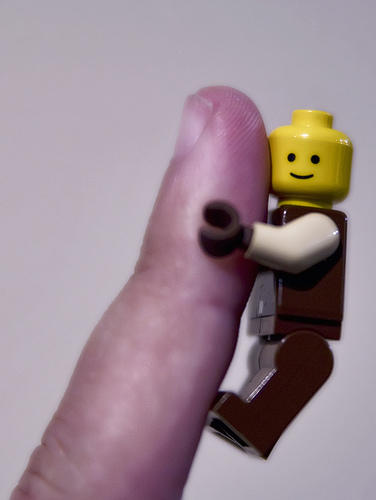
| Be your mother's daughter: this means that you are very close to your mother, and you both are very similar. |
 |
| Twist someone round your little finger: to manipulate and control someone. |
 |
| Blood is thicker than water: family relationships are stronger and more important than any other kind of relationships. |
Lastly, if you want to have some reading, listening, and vocabulary practice around a story based on an idiom, use this lesson by the British Council called Two Peas in a Pod. Click on "instructions" and "preparation" to know how to do the task, and a pre-reading activity. Maybe it's a bit above an intermediate level, but you can try with patience and effort. So don't worry if you find it difficult.
Enjoy!
Enjoy!
Stages of life
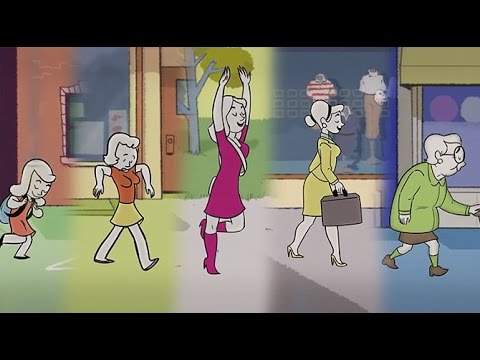
If you wish to revise some vocabulary related to stages of life, there is a quite easy worksheet to do from the website Lingua house: Stages of life.
And maybe you can enjoy this short movie called Sidewalk by Celia Bullwinkel, in which the author portrays the journey of a woman since childhood to adulthood.
Wednesday, November 25, 2015
How to complain properly
 In this post you will find several documents regarding formal complaints and letters of complaint. Some of them were used at class, but others (documents, activities and listening exercises) are new, so check them to have further practice.
- Structure of a complaint letter. In this document you'll find several kinds of letters, but for now we're interested in the letter of complaint.
- Formal letters. This is a nice document which summarizes the basics to write a formal letter (no contractions, opening, ending, etc.). In other words, it shows tips.
- Complaining and apologizing. This is the lesson we used in class, and the answer keys are on the last page. You can also check the listening track.
- Complaining as a customer. This is just a short file summarizing the basic information taught on a lesson by the BBC Learning English, which I include next.
- Traveller's tales. In this lesson from the BBC Learning English you'll find further information about complaining. You can listen to a conversation (and read the transcript later), checking the tips for complaining and do an activity at the end.
Thursday, November 19, 2015
Are you shopaholic?
.jpg)
In this post I'll give you two different activities related to the topic of shopping.
The first one is a reading activity located on the BBC Learning English website (which, by the way, is great for autonomous learning) called The pop-up phenomenon. Here you can learn new vocabulary and revise the present tenses.
The second activity is a gapped text for a listening called Shopping. On the link you will have access to the audio track, the gapped text and the answer keys.
And that's all for now. Have fun!
Friday, October 30, 2015
Mind map about holidays
Weekend's almost here! Before I leave, here I bring you the mind map I showed you in class. And here's another one which caught my attention and you can use as a model for your own.

That being said, have a wonderful weekend! See you next week!


That being said, have a wonderful weekend! See you next week!

Monday, October 26, 2015
Activities with adjectives
How's been the weekend?
As you'll see, I've uploaded some material from our books. You have these activities photocopied (I gave them to you in class), but I'm posting the full pages with the answers, so you can correct them by yourselves. I think there's no need to correct it in class, but you can ask for doubts if you need to.
As you'll see, I've uploaded some material from our books. You have these activities photocopied (I gave them to you in class), but I'm posting the full pages with the answers, so you can correct them by yourselves. I think there's no need to correct it in class, but you can ask for doubts if you need to.
- 1B Grammar:
- 1B Vocabulary:
- exercise a) keys, first half
- exercise a) keys, second half
- exercise b) keys, first half
- exercise b) keys, second half
Subscribe to:
Posts (Atom)